
There is high interest in developing next-generation weight loss therapies, including sustained release peptide agonists and oral peptide therapies. Therapies that selectively drive fat loss without muscle wasting are also drawing significant clinical attention. Evaluating these therapies in preclinical animal models remains a critical stage of drug development, since in vivo systems capture metabolic and body composition effects that cell-based assays cannot.
Mouse models of obesity and related complications fall into two categories: induced and genetically engineered. Diet is the primary stimulus used to induce an obese phenotype, most commonly through a high fat diet in models such as Diet-Induced Obesity (DIO) mice. Genetically engineered models, such as ApoE variant mice, develop obesity and related lipid abnormalities when exposed to a high fat diet, making them useful for studying both obesity and downstream complications like hyperlipidemia and atherosclerosis.
The Biomere team has experience working with the following models for obesity and related complications:
Disease Indication | Model | Species |
Obesity | Diet-Induced Obesity (DIO) | Mouse |
Ob/Ob Mice | Mouse | |
Hyperlipidemia & Hypercholesteremia | High-Fat, High-Calorie (HFHC) Diet in ApoE Mice | Mouse |
Atherosclerosis |
Large animal models of obesity are more complicated to develop and manage. At Biomere, we have characterized our large animal colony based on body weight, condition, blood chemistry and metabolic profiles. This data allows careful selection of models for each study to reduce data variability.
Biomere has metabolic cages available to collect urine and feces for downstream metabolism analysis.Obesity studies typically focus on translational endpoints including body weight, energy expenditure and blood chemistry analysis including glucose, insulin, triglycerides, cholesterol and other metabolic biomarkers. We have deep expertise in evaluating inflammation markers often observed in obesity using ELISA based assays including multiplex MSD panels. In addition to biomarkers, Biomere offers exercise based assays using a treadmill, rotarod and grip strength to evaluate muscle function and therapy induced wasting.
Large animal models of obesity are more complex to develop and manage than rodent models. At Biomere, we characterize our large animal colony based on body weight, body condition, blood chemistry, and metabolic profiles. This characterization allows careful model selection for each study, reducing data variability and strengthening study outcomes.
Biomere offers metabolic cages to collect urine and feces for downstream metabolism analysis. Obesity studies typically focus on translational endpoints, including body weight, energy expenditure, and blood chemistry analysis such as glucose, insulin, triglycerides, cholesterol, and other metabolic biomarkers. The team has deep expertise evaluating inflammation markers commonly observed in obesity using enzyme-linked immunosorbent assay (ELISA) based methods, including multiplex Meso Scale Discovery (MSD) panels. In addition to biomarker analysis, Biomere offers exercise based assays, including treadmill, rotarod, and grip strength testing, to evaluate muscle function and therapy induced wasting.
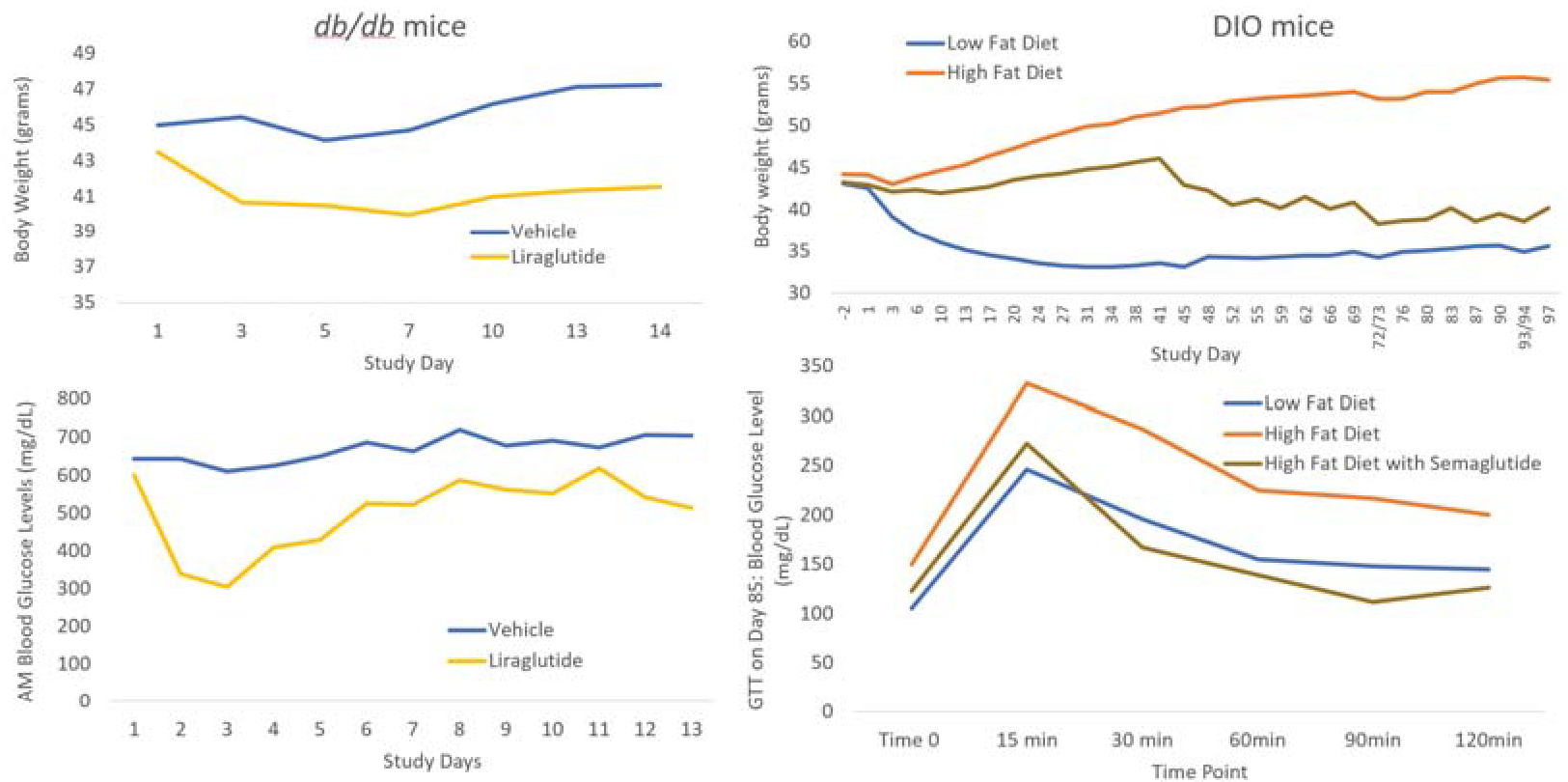
Figure 1: Changes in body weight and blood glucose in db/db mice treated with either vehicle or the GLP-1 receptor agonist liraglutide (left panels). Changes in body weight and blood glucose in DIO mice fed with either low fat or high fat diet -/+ semaglutide (right panels)
Biomere has experience with multiple rodent models of metabolic disease, including obesity, type I and type II diabetes, hyperlipidemia, and hypercholesterolemia. The team has worked with established animal models, including induced and genetically modified models, for type I and type II diabetes. For example, Streptozotocin (STZ) destroys the pancreatic beta cells that produce insulin, mimicking type I diabetes. Type II diabetes models include ob/ob and db/db mice, engineered to be leptin deficient and leptin receptor deficient respectively, and Zucker Diabetic Fatty (ZDF) rats, which carry a leptin receptor mutation (fa/fa) and spontaneously develop insulin resistance, hyperlipidemia, and obesity. Because these rodent models recapitulate many hallmarks of diabetes, they are also used to study related complications such as delayed wound healing and kidney damage. More recently, these models have been used to study the protective effects of glucagon-like peptide-1 (GLP-1) receptor agonist therapies.
Relevant endpoints for metabolic models include body weight, blood glucose, insulin, and hemoglobin A1c (HbA1c) measurements. Additional endpoints include cytokine levels and clinical chemistry markers such as HDL, LDL, total cholesterol, triglycerides, and liver enzymes. Biomere works with specialist partners to offer comprehensive histopathology services, including H&E staining and singleplex and multiplex immunohistochemistry (IHC) and immunofluorescence (IF) analyses.
Biomere has evaluated the following models for diabetes and related complications:
| Disease Indication | Model | Species |
| Type I Diabetes Mellitus | STZ-Induced Diabetes | Mouse, Rat |
| Type II Diabetes Mellitus | OB/OB Mice | Mouse |
| DB/DB Mice | Mouse | |
| Zucker Diabetic Fatty (ZDF) Rat | Rat | |
| Diabetic Nephropathy | STZ Induction +Nephrectomy + High Salt Load | Mouse, Rat |
| Delayed Diabetic Wound Healing | STZ Induction (Type I Diabetes) + Skin Excision | Rat |
| Type II Diabetes (DB/DB Mouse or ZDF Rat) + Skin Excision | Mouse, Rat |
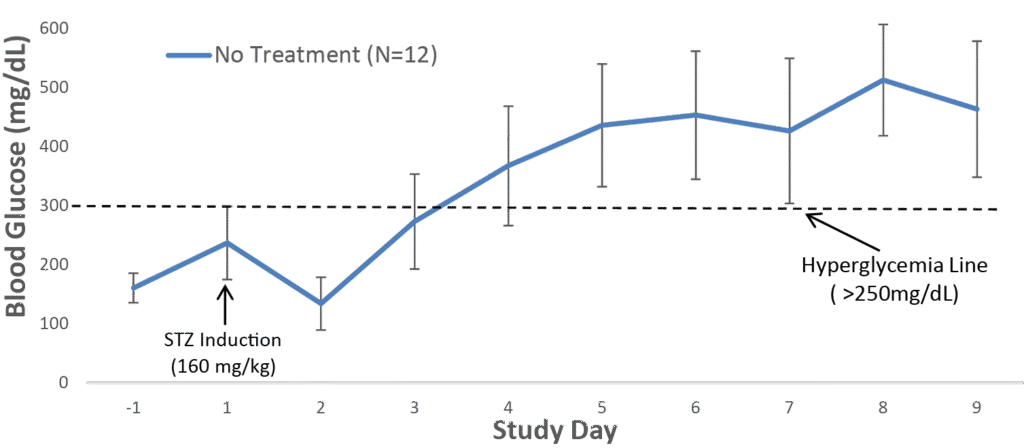
Figure 2: Changes in blood glucose levels of mice treated with Streptozotocin (STZ) over 9 days.
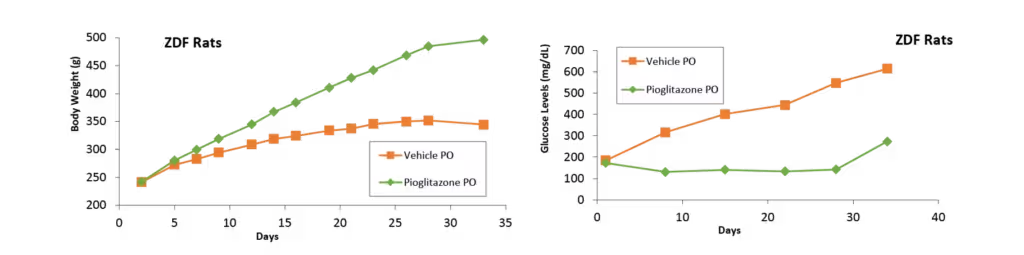
Figure 3: Changes in body weight and blood glucose levels in ZDF rats treated with either vehicle or pioglitazone (an approved therapy to manage type II diabetes).

