Accelerating Preclinical Breakthroughs With Trusted In Vivo Science
Comprehensive non-GLP PK/PD and early toxicology expertise powered by extensive vivarium space, endpoint analysis, and multidisciplinary scientific support.
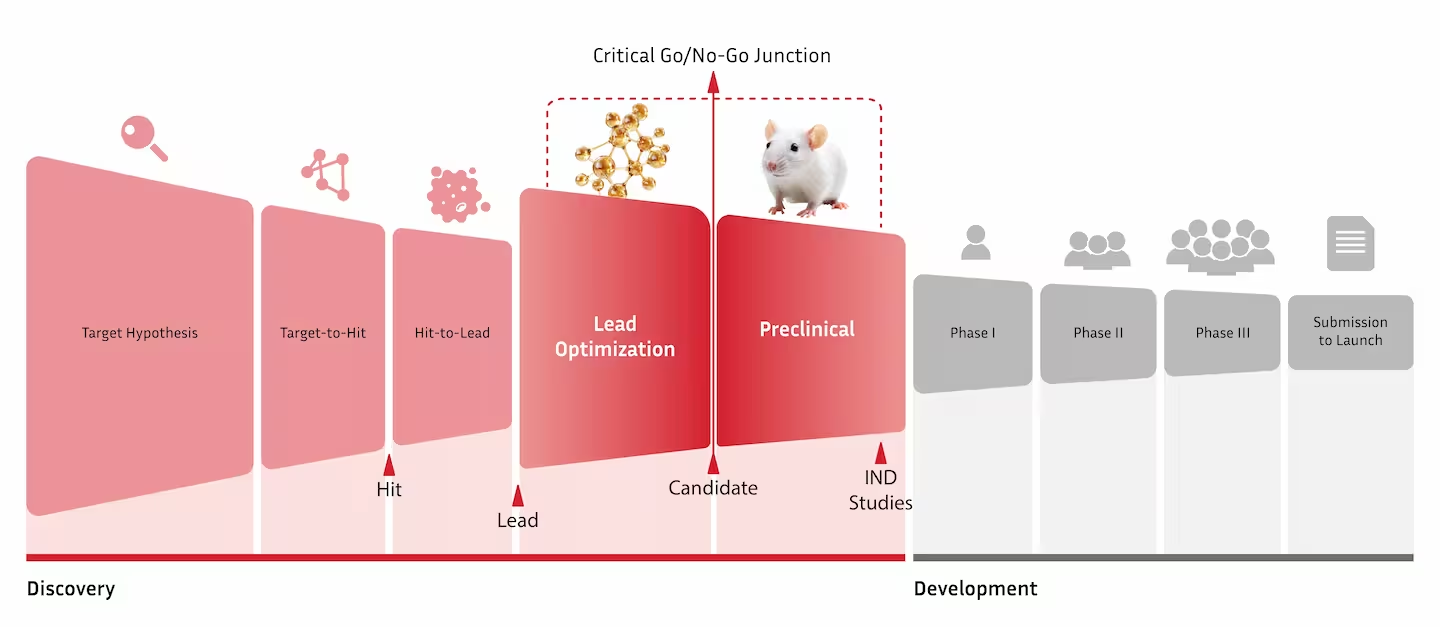
The transition from Lead Optimization to IND-enabling studies relies heavily on preclinical PK/PD data. Once a therapeutic asset is designed and tested in in vitro models, it is essential to evaluate dosing, distribution, metabolism, efficacy and off-target in in vivo models.
If a therapeutic is too toxic or is not reaching the target issue or has too narrow a therapeutic window, it would be advisable to reassess future plans. In contrast, promising ADME and PD data builds confidence to move towards IND-enabling studies.
Biomere’s scientists focus on generating PK/PD and early tox data to support the go/no-go stage gate in preclinical drug development.
Complex In Vivo Studies Made Simple
At Biomere, our scientific and commercial teams have several years of expertise in designing and executing preclinical PK/PD and early tox studies. We work closely with you to build budget optimized study designs to support scientific decision making.
Biomere is a Boston-area preclinical CRO specializing in non-GLP PK/PD and early toxicology studies in small and large animal models. We have a proven track record in evaluating various types of small molecules and complex biologics targeting different disease states. With extensive vivarium capacity, fully equipped labs, and a team of experienced scientists, we deliver fast, reliable insights that accelerate go/no-go decisions.
Interested in learning more about how ADME and early tox studies can help you make decisions on accelerating or changing your drug development program?
How does a PK/PD study support the evaluation of a new therapy?
PK/PD is a critical “go/no-go” stage-gate and is required to de-risk drug development by transforming the understanding of how, when, where and for how long a therapy exerts efficacy. Some of the key data pieces include understanding the MoA or mechanism of action, identifying active drug metabolites, establishing the therapeutic window of exposure vs response and identifying optimal doses and routes of administration.
How do cell-based PK studies compare to in vivo studies?
Complex cell-based models are useful models for PK studies as they provide granular controlled insights on how a drug interacts with specific cellular components. In comparison, in vivo studies provide a more comprehensive view of how a therapeutic behaves within the constantly changing, interconnected systems of an intact living organism. There are several advantages to both approaches. The in vitro models are simpler and focus on one or a few specific endpoints allowing for scalable throughput and rapid data generation. Data from in vivo models are typically more translational and due to intact physiology are typically more representative of the human state. Additionally, in vivo models are useful to identify unexpected off-target effects which can be very informative.
Why is it essential to determine the route of drug administration early in preclinical testing?
Identification and optimization of the route of administration for a therapeutic is essential to ensure optimal ADME characteristics, therapeutic efficacy and manage toxicity at the administration site and systemically. The dosing route helps determine drug bioavailability and will also account for first-pass metabolism. For example, an orally administered therapeutic would need to be resistant to degradation in a low pH environment. The dosing method is a critical input for formulation design to ensure that therapeutically relevant doses can be delivered to the target organ or tissue.
Why are early toxicology studies important in preclinical drug development?
Non-GLP investigative toxicology studies are an important step in the preclinical drug development process so that unacceptable side effects can be identified early. This supports the key drug development concept of “fail early” where therapeutics with high toxicity profiles can be removed early from the drug development pipeline saving time, budget and resources. Additionally, early tox studies are useful to revise or tweak the drug structure (chemical entities) or sequence (antibodies, nucleic acids) before progressing towards IND-enabling GLP-tox studies.