We combine a growing portfolio of ocular disease models with specialized ocular dosing techniques and imaging methods to comprehensively evaluate PK/PD, distribution and adverse effects of novel ocular therapies and devices.
The Biomere team has validated several ocular disease models using state-of-the-art techniques including in-life imaging and terminal imaging and tissue collections. The team focuses on evaluating PK/PD characteristics and early safety profiles of novel therapies to treat ocular diseases. The Biomere site in the US has a variety of ocular models under development and has interest in collaborative model development on new and unique ocular models. Our combined preclinical and clinical research experience distinctively positions us to support our clients’ preclinical ophthalmic needs.
Dosing Techniques
The Biomere ocular team has deep expertise in a range of dosing techniques in mouse, rat, rabbit and primate models. Most of the dosing methods are applicable to large and small animal species, and include the following local and systemic methods:
Topical eye
Intravitreal injection
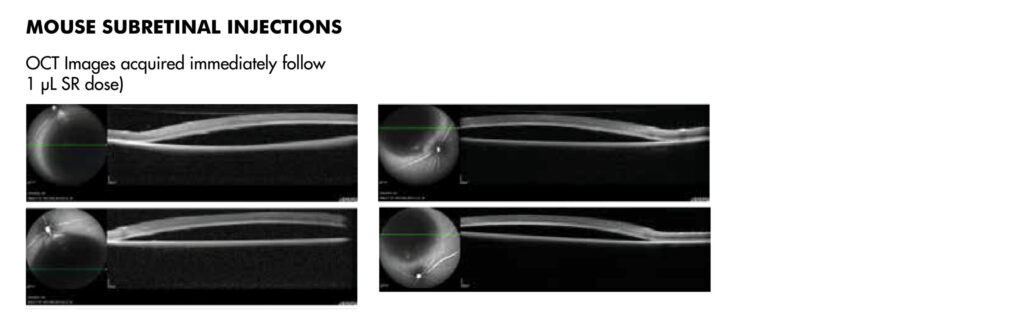
Subretinal injection
Subconjunctival injection
Intracameral injection
Systemic delivery including oral, subcutaneous, intraperitoneal, intratracheal, and intravenous
Suprachoroidal dosing is limited to rabbit and primate models.
Figure 1: OCT images of mouse eye post sub-retinal injection of 1 microliter SR
On This Page
Ocular Disease Models
The Biomere site in Worcester has validated the following ocular disease models for preclinical studies, and is continuously developing and validating new disease models:
An ocular drug delivery system is a drug formulation that is designed to deliver a therapeutic to a specific part of the eye. Common examples include topically applied eye drops, or an injection into the retina (subretinal) or vitreous humor (intravitreal). Given the complex tissue architecture of the eye, it is very important to evaluate the route of administration in relevant animal models, such as rabbits. Biomere’s ocular scientists have expertise in multiple routes of ocular drug delivery, including subretinal, intravitreal, subconjunctival, and topical, to assess ADME characteristics, including distribution and clearance, as well as potential adverse effects such as acute toxicity, inflammation responses, and tissue damage.
What is ocular drug toxicity?
Ocular drug toxicity is an adverse reaction to a therapy that is administered systemically or locally to eye tissues. Ocular toxicity can also be caused by exposure to organic chemicals, including acids and solvents, which can splash into the eye and damage tissues. The most well-known ocular drug toxicity is damage or inflammation to the conjunctiva caused by direct exposure. Because the eye contains highly specialized structures with limited regenerative capacity, even mild toxic responses can lead to significant functional impairment. Biomere’s ocular team evaluates potential toxicity across a range of ocular tissues using in-life imaging, terminal histopathology, and other specialized assessments to identify and characterize adverse effects of novel therapies early in development.
What types of drugs are administered to eye tissues?
Many different drug types are administered directly into the eye. The easiest route of administration is topical, where therapies formulated as eye drops are applied directly to the eye surface. This is the most common route for anti-allergy eye drops, glaucoma medications to reduce intraocular pressure, antibiotics to combat infections, and steroids to control inflammation. Topical application is also used for sympathomimetic and NSAID-class ocular drugs. For diseases affecting the back of the eye, such as wet AMD, diabetic retinopathy, and inherited retinal disorders, more targeted delivery methods are required, including intravitreal, subretinal, subconjunctival, intracameral, and suprachoroidal injection. Biomere supports preclinical evaluation of small molecules, biologics, gene therapies, cell therapies, and intraocular devices across all of these routes of administration.
How does ocular drug testing work in preclinical studies?
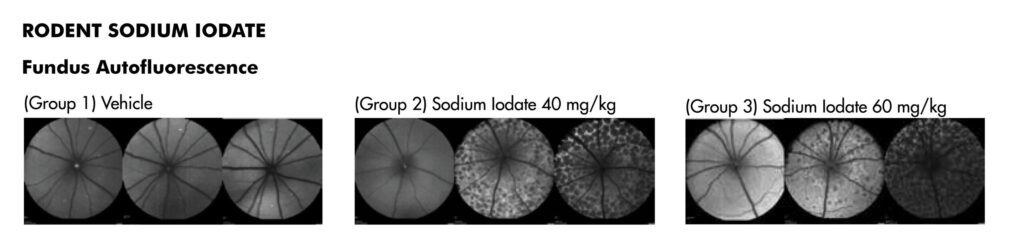
Preclinical ocular drug testing is designed to evaluate how a therapy behaves in the eye before it advances to human clinical trials. This typically includes pharmacokinetic and pharmacodynamic (PK/PD) studies to determine how the drug is absorbed, distributed, metabolized, and cleared from ocular tissues, along with efficacy studies in validated disease models and toxicology assessments to identify potential adverse effects. Biomere combines a portfolio of ocular disease models with specialized dosing techniques and in-life imaging methods such as OCT and fundus autofluorescence to preclinical data packages that accelerate the path to GLP-toxicology studies.