
Biomere helps oncology drug developers evaluate complex immunotherapies using advanced humanized mouse models designed to generate clinically relevant data. Our scientists support translational oncology programs with PBMC and CD34+ stem cell humanization approaches that enable robust evaluation of checkpoint inhibitors, antibody-drug conjugates (ADCs), bispecifics, T-cell engagers, and other novel immunotherapies.
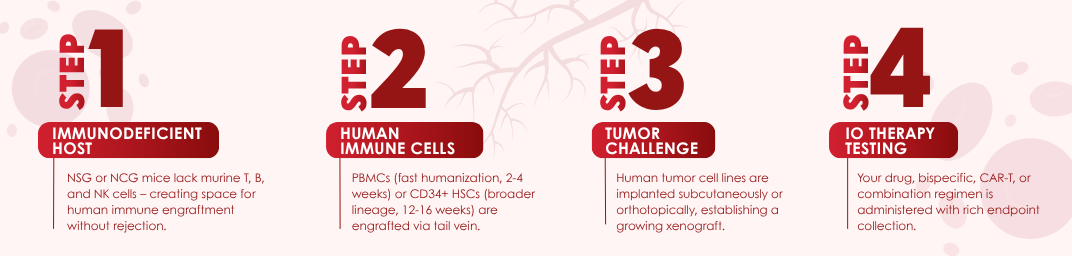
Humanized mouse models bridge the gap between syngeneic models with murine immune systems and PDX models with limited immune context. By combining immune-deficient mouse strains with human immune cells and tumor grafts, Biomere enables more predictive in vivo oncology studies that improve translational confidence.
When evaluating complex immunotherapies, you need more than animal models. You need a responsive scientific partner with experience designing and executing translational studies that align with your program timelines and therapy complexity.
Biomere’s scientists collaborate closely with biotech and pharma sponsors to develop customized preclinical humanized mouse model studies. Clients can engage directly with study teams, participate in on-site visits, and receive transparent communications at a regular cadence, throughout study execution.
Humanized mouse models studies are optimal for the following studies:
The Biomere team supports:
Generate clinically relevant efficacy data using humanized mouse models to evaluate immune checkpoint inhibitors, ADCs, bispecific antibodies, and T-cell engagers in vivo with functional human immune cells.
Quantify target cell depletion, immune subset dynamics, and intra-tumoral immune landscapes through integrated histopathology and flow cytometry workflows that provide deeper insight into therapeutic activity.
Identify cytokine release syndrome-like responses and on-target/off-tumor effects earlier in development using models that better replicate human immune responses.
Work with a flexible, high-touch CRO team experienced in rapidly evolving oncology discovery programs and translational immunology studies.
Biomere provides customized humanized mouse model solutions to support translational oncology and immunotherapy development programs across multiple modalities and therapeutic strategies.
Peripheral blood mononuclear cells (PBMCs) deliver rapid engraftment with robust T-cell responses and are well suited for evaluating:
CD34+ hematopoietic stem cells generate multilineage human immune development, including:
These models are ideal for:
Feature | PBMC Humanization | CD34+ Humanization |
|---|---|---|
Engraftment Time | 2–4 Weeks | 12–16 Weeks |
Immune Cell Population | T-cell dominant | Multiple immune lineages |
Graft vs Host Disease Window | 3–6 Weeks | 10–22 Weeks |
Demonstrate tumor growth inhibition mediated by human immune cells in response to monotherapy or combination therapy.
Understand how therapies engage the human immune system through immune profiling, target engagement analysis, and tumor microenvironment characterization.
Evaluate cytokine release syndrome-like responses and immune-mediated toxicities in a translational in vivo setting.
Whether you are evaluating checkpoint inhibitors, ADCs, bispecifics, T-cell engagers, or novel immunotherapy combinations, Biomere can help generate translational data to support critical oncology development decisions.
Talk with Biomere’s scientific team about your therapeutic strategy, model requirements, study timelines, and translational endpoints.

