Endpoint Analysis

The Laboratory Science team at Biomere is led by PhD scientists with deep expertise in developing and running a wide range of assays to evaluate changes in biomarker expression, signaling pathways and cell physiology in tissues from animal models dosed with novel therapies.

Overview of Endpoint Analysis Portfolio

Biomere’s Laboratory Science team is focused on supporting downstream analysis of in-life and terminal samples from small and large animal studies. The team’s experience across diverse disease models and species enables us to design and align in vitro assays that comprehensively evaluate blood, serum, plasma, and tissue samples. We have developed a portfolio of assays through a combination of in-house capabilities and partnerships with platform companies and service providers. Our in-house capabilities include cell isolation and tissue dissociation, clinical chemistry assays, quantitative RT-PCR (qPCR), flow cytometry panels, singleplex sandwich ELISA assays, and multiplex MSD assays. In addition to rodent and large animal samples, the team has experience working with human cell lines and blood samples.

On This Page

Clinical Chemistry Analysis

Our clinical chemistry lab has developed assays to measure multiple endpoints in whole blood, serum, plasma and biofluids, including urine, cerebrospinal fluid (CSF) and synovial fluids. The team uses the Sysmex XN-1000 for hematology analysis, and the Beckman Coulter DXC 700 AU for chemistry analysis. Both instruments are standard in the clinical setting, thus ensuring the translational value of the preclinical data. Both analyzers require small sample volumes, ensuring that samples collected from mice and rat models can be analyzed.

Biomere offers a comprehensive portfolio of hematology endpoints, including, but not limited to: counts of different white blood cells (lymphocytes, monocytes, eosinophils, basophils), platelet volumes and rations, red blood cell counts, and hematocrit analysis. The clinical chemistry analysis includes the measurement of enzyme levels (such as alkaline phosphatase), proteins, metabolite markers, and electrolytes, as well as specialty tests. The specialty tests include apolipoprotein forms, bile acids, lipids, etc. Preset panels that combine different readouts, such as CBC, differential markers, and reticulocytes can be built for specific program needs. We have recently started offering coagulation readouts to analyze changes in the clotting cascade.

Contact Us for a Complete List of Analytes

Cell and Tissue Culture Capabilities

Analysis in the Biomere laboratory typically begins with tissues collected at multiple time points from mice, rats, or large animal models, including rabbits and non-human primates (NHPs), following treatment with either a control or a therapeutic. Biomere’s in vivo teams evaluate a wide range of therapeutic modalities—such as oligonucleotides, lipid nanoparticles (LNPs), viral vectors, monoclonal antibodies, and small molecules—across a broad portfolio of disease models.

The Laboratory Science team has extensive experience isolating pure cell populations from tissues, including hepatocytes from liver and peripheral blood mononuclear cells (PBMCs) from whole blood, using methods such as enzymatic digestion, mechanical dissociation, density gradients, and magnetic bead–based isolation (Miltenyi and STEMCELL Technologies). In addition, Biomere offers tissue homogenization services to generate whole-cell lysates for downstream applications such as gene expression profiling. The team also applies robust cell culture methods for primary cells, including human PBMCs, as well as commercial cell lines used in in vitro assays evaluating cell viability, proliferation, and apoptosis.

Gene Expression Profiling

The Biomere team has developed a suite of assays to assess gene expression and biomarker changes in response to therapeutic intervention, including quantitative RT-PCR (qPCR), singleplex and multiplex ELISA-based assays, and flow cytometry panels for the evaluation of cell surface and intracellular markers. The team has several years of experience running ELISA and MSD assays to quantify cytokines and other biomarkers across a variety of sample types, including whole blood, serum, plasma, cerebrospinal fluid (CSF), and cell or tissue lysates. These analyses are most commonly performed on tissues and biofluids collected from rodents, rabbits, and non-human primates (NHPs) treated with diverse therapeutic modalities.

Flow Cytometry

Biomere’s comprehensive flow cytometry services deliver high-parameter immune cell profiling, cell phenotyping, receptor occupancy analysis and functional assays, with exceptional precision and sensitivity. Our experienced team specializes in custom panel design, creating tailored assays to meet the unique needs of preclinical research across multiple species, including mice, rats and nonhuman primates. The team uses the CytoFLEX LX cytometer that supports up to 21 color analysis for maximum multiplexing. Biomere’s flow panels are typically 12-15 colors, ensuring high quality data for every marker. In addition to flow cytometry analysis, Biomere offers cell sorting services through a partnership with Sauve Bio.  The team can rapidly deliver both raw data and detailed reports to support timely decision-making. Biomere scientists work closely with clients to design custom flow cytometry panels, analyze diverse cell populations, and continuously expand the portfolio of available assays and capabilities.

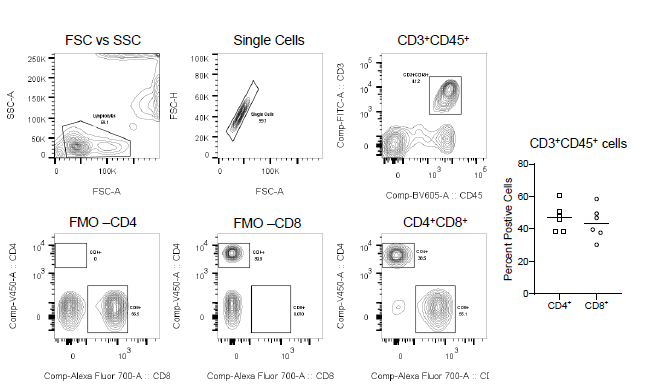
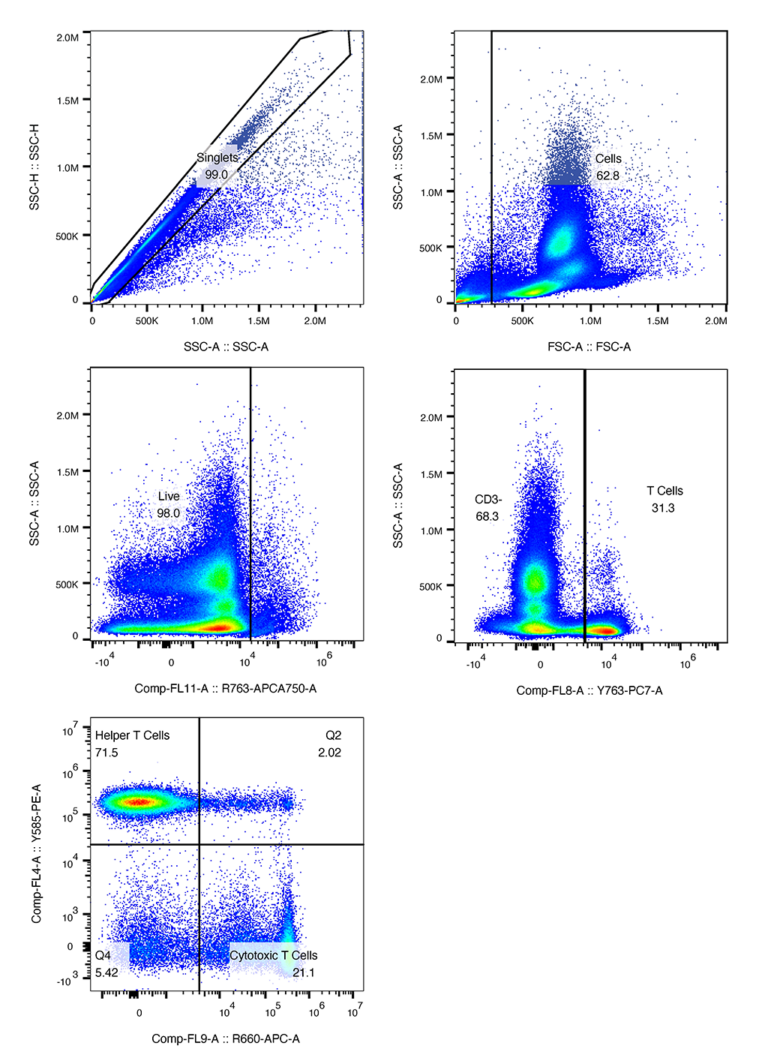
Blood samples collected from six (6) NHPs, stained with anti-cyno-specific antibodies targeting CD3, CD45, CD4, and CD8 to measure the percentage of CD3+CD45+ CD4+ and CD3+ CD45+ CD8+ positive T-cell populations by flow cytometry. (FMO – flow cytometry minus one)
Blood samples collected from six (6) NHPs, stained with anti-cyno-specific antibodies targeting CD3, CD45, CD4, and CD8 to measure the percentage of CD3+CD45+ CD4+ and CD3+ CD45+ CD8+ positive T-cell populations by flow cytometry. (FMO - fluorescence minus one)
Figure 1: Examples of gating strategies in a mixed T-cell population

Sandwich Assays (ELISA and MSD)

The Biomere team is highly experienced in performing sandwich ELISA assays using a variety of detection formats, including colorimetric, fluorescent, and electrochemiluminescent readouts on the MSD platform. The team routinely sources commercially available ELISA kits from client-specified vendors. While Biomere does not develop custom ELISA kits in-house, we work closely with trusted third-party partners to transfer protocols and support validation of custom ELISA assays.

Biomere scientists have also developed deep expertise in multiplex MSD assays for the simultaneous measurement of multiple analytes—such as cytokines, serum markers, and proteins—in samples collected from mice, rats, rabbits, and non-human primates. These assays are optimized for small sample volumes obtained during in-life studies, enabling robust time-course profiling across multiple biomarkers. In collaboration with MSD, the team designs and validates custom assay plates tailored to specific study needs and has experience across the full range of MSD platforms, including U-PLEX customizable panels, V-PLEX validated kits, and R-PLEX antibody sets. This flexibility allows MSD-based analyses to be precisely customized for each client study.


The more popular MSD multiplex panels include:

  • Cytokine Combo Panel
  • Proinflammatory Combo Panel
  • Viral Combo Panel
  • Chemokine Combo Panel
  • Custom Panels

COMING SOON! 

The Biomere team has partnered with Emulate Inc. to offer Organ-Chip Services for preclinical testing. The first system being validated is the Liver-Chip, used to measure drug-induced liver injury (DILI). Please contact us at bd@biomere.com if you are interested in collaborating on the development of specific Organ-Chip systems.

mRNA Expression Profiling using qPCR

Biomere has developed strong expertise in quantitative RT-PCR using both TaqMan and SYBR Green chemistries on the QuantStudio™ 5 platform. Primary sample types include cell and tissue lysates, as well as isolated RNA from blood, PBMCs, and other biofluids. Data deliverables range from raw outputs such as Ct values and melt curves to more advanced analyses, including relative gene expression and fold-change calculations performed using QuantStudio software.

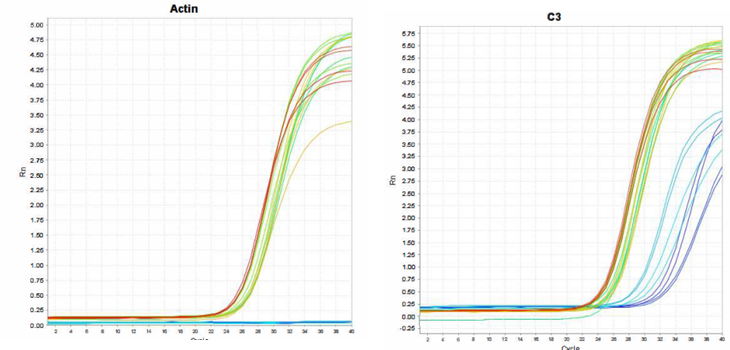
Representative qPCR data showing expression curves for beta-actin (left) and complement C3 gene (right).

Blogs

Has AI Truly Enabled Drug Discovery?

Chinese The use of Artificial Intelligence (AI) in drug discovery has spawned a fast-growing biopharmaceutical segment that is estimated to be $1.5B in 2024 and

Webinars & Symposia

Our global liaison team paves the way to extended resources, abundant pharmacology models and budget friendly options seamlessly.